
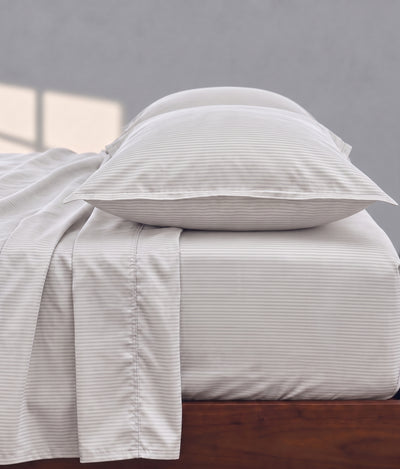
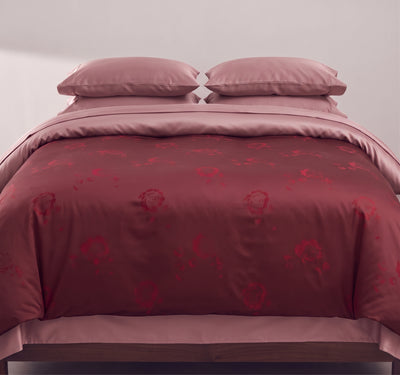


Key Takeaways
-
In the bamboo vs eucalyptus sheets comparison, eucalyptus TENCEL™ lyocell is the stronger all-round pick: more consistent cooling, better pilling resistance, and cleaner chemistry.
-
Both fibers are genuinely soft; bamboo leans plush and drapey, while eucalyptus is smooth, cool-to-touch, and more structured.
-
Eucalyptus lyocell is made in a closed-loop process that recovers over 99% of its solvent; most bamboo bedding is bamboo viscose, made open-loop.
-
Both manage moisture and temperature better than cotton, so either upgrades a hot sleeper's bed, though eucalyptus cools more consistently across weaves.
-
Look for OEKO-TEX® STANDARD 100 Class I on either fiber; it tests the finished textile against 1,000+ harmful substances.
Both bamboo and eucalyptus sheets promise the same upgrade: a cooler, softer night than the cotton set you're replacing.
Line them up, eucalyptus sheets vs bamboo, and they can look interchangeable, two smooth, plant-derived fibers at similar prices.
Spoiler: they aren't.
Eucalyptus lyocell tends to win on consistent cooling, durability, and cleaner processing, while bamboo leans into a plush, drapey softness some sleepers won't trade.
Which one earns a spot on your bed comes down to how you sleep, how you wash, and how closely you read a label, and those details matter more than the marketing lets on.
The coolest sleep starts with the cleanest chemistry, and once you can see where these two fibers quietly split, choosing your next set of new sheets gets a lot clearer.
Eucalyptus vs Bamboo Sheets at a Glance
Here's how eucalyptus vs bamboo sheets compare across the dimensions that decide how a sheet performs.
|
Dimension |
Eucalyptus (TENCEL™ Lyocell) |
Bamboo (Viscose / Lyocell) |
|
How it's made |
Closed-loop lyocell process, over 99% solvent recovery |
Usually bamboo viscose, open-loop process |
|
Cooling & moisture |
Fiber-based, consistent across weaves |
Cooling too, more weave-dependent |
|
Softness & texture |
Smooth, soft, cool-to-touch, structured |
Soft, plush, drapey |
|
Pilling & durability |
Strong; resists pilling |
Can pill with frequent hot washes |
|
Care routine |
Machine wash cold, tumble dry low |
Gentle cycle, gentler handling |
|
Certification |
OEKO-TEX® STANDARD 100 Class I available |
Varies by brand; verify the label |
|
Best for |
Hot sleepers, sensitive skin, chemistry-aware buyers |
Cool sleepers who want plush softness |
How Eucalyptus and Bamboo Become Sheets
The differences between eucalyptus and bamboo start in the production process, long before the sheets reach your bed. Both begin as plant pulp; what happens next is where they split.
The Eucalyptus Lyocell Process
Eucalyptus sheets are made from the wood pulp of eucalyptus trees, spun into TENCEL™ lyocell.
The lyocell process uses a closed-loop system: the solvent that dissolves the pulp is recovered and reused at a rate above 99%, so very little chemical waste leaves the system.
The result is smooth, uniform eucalyptus fibers whose cooling and moisture behavior are structural, not applied.
The Bamboo Viscose Process
Most bamboo bed sheets are bamboo viscose.
They are made by dissolving the bamboo plant's pulp into bamboo fabric in an open-loop process where the water and solvents are not fully recovered.
Conventional bamboo viscose relies on carbon disulfide as part of that process.
Eucalyptus TENCEL™ lyocell uses the closed-loop route to avoid those harsh chemicals, which is a core reason it's the cleaner choice.
Why the Process Ends Up on Your Skin
The production method decides what residues remain in the finished textile that touches you for eight hours a night.
OEKO-TEX® STANDARD 100 Class I is the finished-textile test that confirms restricted substances sit below threshold, whatever the fiber source.
Look for it on both bamboo and eucalyptus bedding before you buy.
Which Fiber Sleeps Cooler?
If broken, sweaty sleep is the problem you're solving, this is the section that matters most. Both fibers manage heat better than cotton, but they cool through different mechanisms.
-
How eucalyptus cools: The lyocell fiber is smooth and highly absorbent, so it pulls sweat into the fiber core, releases it as vapor, and conducts heat off your skin on contact.
Because that happens in the fiber, the cooling holds steady across weaves.
Buffy's Breeze Sheet Set is the measured example, testing at Qmax 0.224 per FTTS-FA-019 for cool-to-touch (cotton sits near 0.13), moving vapor about 2.5 times faster than cotton, and taking up roughly 50% more moisture, for a drier microclimate and steady temperature regulation.
-
How bamboo cools: Bamboo viscose wicks moisture well too, and its porous structure aids airflow and breathability.
The difference is where the cooling comes from: bamboo leans on weave and thread count more than the fiber, so a well-built bamboo sheet sleeps cool while a cheaper one can run warm.
Eucalyptus stays more consistent because the fiber does the work.
-
What the research says: The mechanism that helps most with night sweats is moisture management, whichever fiber delivers it.
A peer-reviewed, IRB-approved study (Montgomery et al.) found moisture-managing bedding improved sleep quality 52% at eight weeks (PSQI), sped sleep onset 53%, and cut sleep disturbances 31%.
Both fibers can fall into that category, and eucalyptus lyocell is one of the most consistent ways to get there.
The Everyday Test: Feel, Pilling, and Care
Cooling gets you into bed; the everyday details decide whether you stay happy with the sheets a year later.
This is where bamboo sheets vs eucalyptus sheets feel most different in daily use.
Softness and Texture
Both are genuinely soft, and both feel smoother and lighter than cotton and linen sheets. The difference is the kind of softness.
Bamboo viscose is plush and drapey, almost weightless, which is why some sleepers find it more luxurious. Eucalyptus fabric is soft in a smoother, more structured way, cool-to-touch with a clean finish that holds up wash after wash.
For sensitive skin, eucalyptus lyocell's smooth fiber creates less friction than many bamboo weaves.
Pilling and Durability
Bamboo viscose can pill more readily than eucalyptus lyocell, especially with frequent washing at higher temperatures, because its fibers are shorter and less uniform.
Eucalyptus lyocell holds its surface better, and Buffy's Breeze Sheet Set is tested for pilling resistance.
A high-quality bamboo set can still last a long time, but eucalyptus lyocell tends to last longer, holding its texture and cooling closer to the way linen sheets do.
The Care Routine
Eucalyptus lyocell is easy: machine wash cold, tumble dry low, skip fabric softener and bleach. That's the whole routine, and the fiber-based cooling doesn't wash out.
Bamboo bedding usually asks for a gentler cycle and more careful handling, and skipping those steps speeds up pilling.
Neither is difficult, but eucalyptus is the more forgiving of the two week to week.
|
Drawn to how long linen lasts? Buffy's Belgian Linen Sheet Set is airy, textured 100% Belgian flax that softens with every wash and holds up for years. |
The Environmental Impact of Eucalyptus and Bamboo
The two fibers are close on the environmental basics that happen before manufacturing.
Eucalyptus and bamboo are both fast-growing, renewable crops that use less water than long-staple cotton and rely on few pesticides in the field, so their farming footprint lands in a similar range.
For most shoppers, the sustainability decision comes down to sourcing and how openly a brand shares it.
So, Which Wins? Eucalyptus Sheets or Bamboo?
Here's what the store can't show you: the real difference between these two fibers doesn't reveal itself on the shelf. It shows up over months of hot nights and wash cycles, which is exactly where they finally separate.
-
Choose eucalyptus lyocell if you sleep hot, have sensitive skin, or want cooling and softness that stay consistent for years with almost no fuss.
-
Choose bamboo if you sleep cool, prize a plush, drapey feel above all else, and don't mind a gentler care routine to protect it.
For most sleepers, eucalyptus is the safer bet: it cools more consistently, resists pilling, and asks less of you at the wash.
Buffy's Breeze Collection is built for exactly that: 100% eucalyptus TENCEL™ lyocell across sheets, duvet covers, and comforters, so the same cool, clean feel carries across your whole bed.
Frequently Asked Questions (FAQs)
Eucalyptus or bamboo sheets, which is better for cooling?
Eucalyptus lyocell has the edge on consistent cooling because the effect comes from the fiber, not the weave, so it holds up across sheet styles and wash cycles. Bamboo cools well too, but its cooling depends more on weave and thread count. For a hot sleeper who wants reliable cool-to-touch, eucalyptus is the safer bet.
What is the difference between eucalyptus lyocell and bamboo sheets?
The main difference between eucalyptus and bamboo is the fiber and how it's processed. Eucalyptus lyocell is made in a closed-loop process with over 99% solvent recovery; most bamboo sheets are bamboo viscose, made open-loop. Eucalyptus feels smooth and structured, bamboo feels plush and drapey, and eucalyptus generally resists pilling better.
Which fiber pulls moisture away faster at night, bamboo or eucalyptus sheets?
Eucalyptus lyocell pulls moisture into the fiber and moves it out as vapor about 2.5 times faster than cotton, which keeps the surface drier through the night. Bamboo also wicks moisture well, but eucalyptus lyocell tends to manage it more consistently because the behavior is built into the fiber.
What is the downside to bamboo sheets?
The main downsides to bamboo sheets are a more demanding care routine, more variability in production chemistry from brand to brand, and a greater tendency to pill with frequent hot washing. High-quality bamboo bedding is genuinely soft and comfortable; just verify the certification on the label and follow the care instructions closely.