
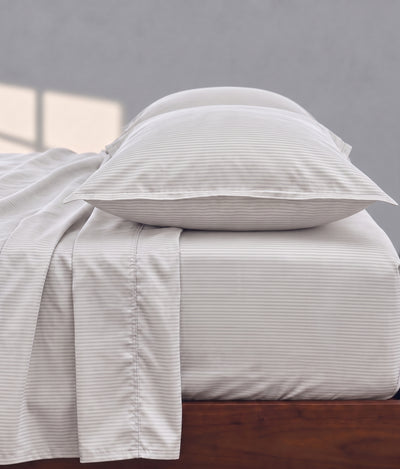


Key Takeaways
-
Cooling blankets cool by moving heat away from your body and letting moisture escape through some mix of airflow, evaporation, and added technology.
-
Fiber-based cooling comes from the material itself, so it survives every wash; coatings and gel infusions can fade with laundry over time.
-
Phase change materials absorb heat as they soften, which feels cool at first touch but works within a limited window.
-
A weighted blanket solves a different problem than a cooling blanket: one is for pressure and calm, the other for temperature.
-
Eucalyptus-derived TENCEL™ Lyocell cools through fiber structure alone, which is the approach behind Buffy's Breeze line.
Somewhere mid-heat wave, half the internet ends up asking the same question: how do cooling blankets work, and are they more than marketing?
The mechanism is real, and simpler than the ads suggest.
A cooling blanket cools by giving heat and sweat somewhere to go. Fibers pull moisture away from your skin so it can evaporate, doing the work of your body's own air conditioning, while an open, breathable weave lets that warmth escape.
The result is a sleeper who stays dry and temperature-regulated through the night.
What separates one blanket from another is how it gets there: some rely on the fiber itself, the approach behind breathable bedding, while others add coatings, gels, or even electricity.
That difference decides how it feels tonight, and how long the cooling lasts.
How Do Cooling Blankets Work? The 3 Mechanisms
Every cooling blanket on the market leans on at least one of three mechanisms.
Knowing which one you're holding tells you how it will feel tonight, and how it will perform after fifty washes.
Airflow: Weaves That Let Heat Escape
The simplest mechanism is ventilation.
An open weave leaves microscopic gaps for air to circulate, so the warmth radiating off your skin drifts up and out through the fabric.
A regular blanket does the opposite: dense construction traps a layer of warm air against you, which is cozy in January and the reason you overheat in July.
More airflow, less trapped warmth. No technology required, just structure.
Moisture: Fibers That Keep You Dry
The second mechanism works with your skin. When you sleep warm, you release moisture all night, and fabric decides what happens next.
Fibers that absorb that moisture and release it into the air keep the surface next to you dry, and the evaporation itself carries warmth along with it.
Fabric that can't do this leaves a humid pocket under the covers, the clammy feeling that wakes hot sleepers more reliably than warmth alone.
Added Tech: PCMs, Gels, and Plug-In Cooling
The third route adds cooling from outside the fiber.
Phase change materials, usually applied as a coating, absorb body heat as they soften, like an ice cube absorbing warmth as it melts. That's the glassy, cold-at-first-touch feel of many viral cooling blankets.
Gel infusions work on similar logic, and electric cooling blankets circulate water or air through the bedding itself.
These all do something real. The trade-offs are just as real: PCMs work within a limited window before they're "full," and coatings can wash out gradually. Anything with a plug adds noise, maintenance, and a cord to your bed.
Fiber-First Cooling: How Buffy Does It Without Coatings
Buffy's approach skips the additives and picks a fiber that handles both jobs natively.
Eucalyptus-derived TENCEL™ Lyocell absorbs and releases moisture, supporting a drier microclimate under the covers, and it's cool to the touch, verified by independent testing.
Because the cooling comes from the fiber's own structure, there's no coating to fade and nothing to recharge. Wash it a hundred times, and it works the way it did on night one.
That fiber runs through Buffy's entire Advanced Cooling System.
Breeze sheets form the base, the Breeze Comforter plays the blanket layer, cooling covers dress it, and cooling pillows handle the head, which sheds a surprising share of body heat.
Every piece is OEKO-TEX® STANDARD 100 Class I tested against more than 1,000 harmful substances, so the fabric doing all that work against your skin is verified as well as cool.
A cooling setup works best when every layer agrees on the same job.
Cooling Blanket vs. Weighted Blanket: Two Different Jobs
The two get shopped together, and they shouldn't be swapped for each other.
A weighted blanket uses pressure, usually from glass beads or dense fill, to create the calming, swaddled feeling some people love.
All that weight does nothing for body temperature, and the dense fill that creates it often holds warmth, which is why plenty of owners run hot under them.
A cooling blanket optimizes for the opposite variable: temperature first, weight barely at all.
Neither is the wrong buy. They're just answers to two different questions.
Cooling Blankets Work Best When You Stop Noticing Them
After all the mechanisms, one test outranks the spec sheet: the best cooling blanket is the one you eventually stop noticing.
Cooling you have to operate keeps temperature on your mind; another setting to check before bed. Temperature regulation that lives in the fiber never asks for your attention, so the whole subject quietly drops off your nightly agenda.
That's the real finish line, because the most restful nights are the ones with nothing to manage.
It's what Buffy builds toward with the Breeze Comforter: a comforter that works on its own, every night, until overheating becomes something you used to think about.
Frequently Asked Questions (FAQs)
How do cooling blankets work to keep you cool at night?
They give your body's heat and moisture a way out. Breathable weaves let warm air escape, and moisture-managing fibers keep the surface against your skin dry so evaporation can cool you. Some designs add heat-absorbing coatings or gels on top. Fiber-based cooling works continuously and survives washing, while additive-based cooling tends to be strongest at first touch.
Do cooling blankets work for menopause hot flashes?
They can help with comfort, and that's the honest scope. Hot flashes start from an internal trigger, so no blanket prevents or treats them. Breathable, moisture-managing bedding makes the aftermath less disruptive by keeping you drier and more comfortable while your body resets. In one small study of sleepers dealing with severe night sweats, switching to moisture-managing bedding improved overall sleep quality scores by 52%. Learn more in our guide to the best sheets for night sweats and hot flashes.
Are cooling blankets safe for babies and toddlers?
For babies under 12 months, no blanket belongs in the sleep space at all. Pediatric safe sleep guidance rules out loose bedding and anything weighted, so the question of are cooling blankets safe for infants answers itself: skip the blanket and dress the baby in one more layer than you'd wear. For toddlers past the crib stage, fabric is the safety lever. Breathable fibers with OEKO-TEX® STANDARD 100 Class I testing have been screened at the certification's strictest tier, the one designed for baby products, making them gentle on sensitive, young skin. When in doubt, ask your pediatrician.