


Key Takeaways
-
OEKO-TEX® certification is a chemistry claim: the finished textile was lab-tested against more than 1,000 harmful substances and met the limit values for its product class.
-
Organic certification is a farming claim: fiber grown without synthetic chemicals or GMOs, with GOTS, the Global Organic Textile Standard, as the flagship for textiles.
-
Neither label implies the other: conventionally grown fiber can pass OEKO-TEX® testing, and organically farmed fiber can fail it.
-
Since April 2025, STANDARD 100 certificates carry no "organic" or "GMO-free" cotton claims; those now belong to the dedicated OEKO-TEX® ORGANIC COTTON standard.
-
A sheet can carry either label, both, or neither; each certification vouches only for what it actually verified.
Walk the bedding aisle, and you'll meet both tags within a minute: one sheet set labeled certified organic, the next carrying an OEKO-TEX® label. They sound like versions of the same promise.
So, is OEKO-TEX® organic? No, and it isn't even trying to be.
OEKO-TEX® is a chemistry standard: it lab-tests the finished textile you bring home. Organic is a farming standard: it certifies how the fiber was grown before any dye or finish entered the picture.
A shopper comparing lab-tested sheets with organic ones is weighing two different claims.
That's worth settling before you buy your next sheet set, whichever tag it's wearing.
Here's why the labels get tangled, how they actually differ, and the one case where OEKO-TEX® does certify organic.
OEKO-TEX® vs Organic: Why the Two Get Confused
The confusion is earned. The two labels share shelf space, share the same plant-forward packaging, and get flattened by shop filters into a single word: certified.
Add a marketplace where "eco" carries no legal definition, and greenwashing does its best work in that gap, where two labels that mean different things end up read as one.
So does OEKO-TEX® mean organic? No, and the cost of assuming it does runs in both directions.
A shopper who reads the tested label as organic believes they've bought a farming claim nobody made. A shopper who reads organic as tested believes the finished fabric was screened when it never was.
Either way, they've paid for an answer to a question their label never asked, which is why the split is worth two minutes of your time.
How OEKO-TEX® and Organic Certification Differ
The cleanest way to hold the difference: one system starts at the lab, the other starts at the soil.
The Chemistry Standard: What OEKO-TEX® Verifies
OEKO-TEX® STANDARD 100 takes the finished product, every component of it, from fabric and dye to thread and buttons, and runs lab tests against more than 1,000 harmful substances: formaldehyde, heavy metals, banned azo dyes, and pesticide residues among them.
Limit values are set by product class, and the more direct the skin contact, the stricter the thresholds.
Testing runs through independent certification bodies, and every certificate expires after a year. What it never asks is how the fiber was grown.
The Farming Standard: What Organic Certification Verifies
Organic certification starts at the farm level: organic farming means fiber grown without synthetic pesticides and without genetically modified organisms.
For textiles, the flagship is GOTS, the Global Organic Textile Standard.
A GOTS product needs at least 70% certified organic fiber, or 95% for its full "organic" label. From there, the certification process audits every stage of textile production across the entire textile supply chain.
It also adds social criteria, safe working conditions, and defined labor practices among them, which is why GOTS reads as environmentally friendly and socially responsible in scope.
What it never does is lab test the finished fabric.
What That Means on Your Sheets
Because the scopes don't overlap, combinations run every direction.
Conventional cotton can earn STANDARD 100 if the finished fabric passes its lab tests. Organically grown fiber can fail those tests if dyeing or finishing introduced something the screening catches.
A single product can even hold both certifications, each vouching for its own stage.
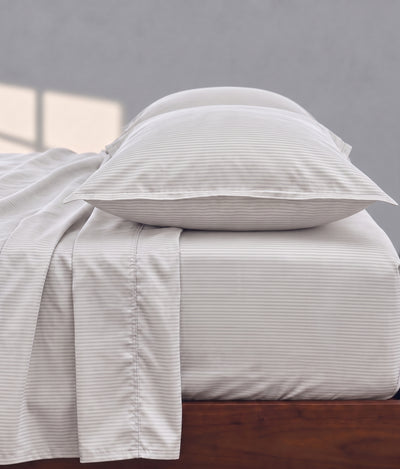
Buffy makes exactly one of those claims, the chemistry one, and makes it at the strictest level the system offers: every sheet is certified to STANDARD 100 Class I, which you can see across our OEKO-TEX® certified sheet sets.
That's the whole claim, and it comes with lab results on the fabric that actually touches your skin.
The Exception: When OEKO-TEX® Does Certify Organic Cotton
There's one place where the two systems meet, and it's recent.
In its 2025 regulations, OEKO-TEX® drew a hard line for cotton: since April 1, 2025, STANDARD 100 certificates no longer include "organic" or "GMO-free" cotton claims.
The certifier's stated reason is blunt: certified organic cotton is an area where fraud is prevalent, and it wants to put its name only on cotton it can verify.
The rule is cotton-specific; organic hemp, linen, and wool claims are unaffected. Manufacturers and brands that want an organic claim on cotton now need a different certificate.
That claim now runs through a dedicated organic cotton certification, OEKO-TEX® ORGANIC COTTON, which does what STANDARD 100 deliberately doesn't: verification from farm to product.
Certified articles need a minimum 70% organic cotton share, with a 100% grade above it.
A quantitative GMO test screens for genetically modified cotton and differentiates between contamination and deliberate mixing with conventional cotton, and transaction certificates document chain of custody through the processing stages.
Products bearing this label carry both the field's story and the lab's.
The takeaway: when OEKO-TEX® speaks about organic at all, it puts testing and certification behind the claim, with the finished goods still screened for harmful substances on top.
Organic Speaks for the Field; OEKO-TEX® Speaks for the Sleeper
Underneath the acronyms, “is OEKO-TEX® organic” turns out to be a question about who a label looks after.
Organic certification cares for the world that makes a fabric: the soil, the water, the people working the farm. A finished-fabric test cares for the person who lives with it: the skin that spends eight hours a night against the weave.
Both are worth wanting, and some products carry both. But only one of them is about you.
If the body you're shopping for is the one climbing into bed, start with the label built for it.
Every Buffy sheet carries its strictest form, STANDARD 100 Class I, across the full sheet collection: Breeze, Supima cotton, and Belgian linen alike.
Frequently Asked Questions (FAQs)
Is OEKO-TEX® certification the same as organic?
No. OEKO-TEX® certification is a chemistry claim about the finished fabric: lab tests confirm the product cleared the thresholds for more than 1,000 substances. Organic certification is a farming and processing claim about how the fiber was grown and handled. A product can carry either, both, or neither, and neither label implies the other.
If bedding is not organic but is OEKO-TEX® certified, is it still safe?
STANDARD 100 certified bedding has been lab-tested against more than 1,000 harmful substances and cleared the thresholds for its product class, and that's the direct measure of what's in the fabric against your skin. Organic status describes farming, and it doesn't change the finished fabric's test results in either direction. For chemical exposure specifically, the tested certification answers the question on its own terms: with a lab result.
OEKO-TEX® vs organic certification: Which matters more for chemical safety?
For chemical safety in the finished product, finished-product testing is the direct evidence: it screens the fabric after dyeing and finishing, where most processing chemistry enters. GOTS certification controls the farm, and GOTS standards restrict many processing inputs along the way, which is valuable, but it doesn't lab test the final fabric. Plenty of shoppers treat the two as complementary. For what touches skin, the lab tests speak most directly.