
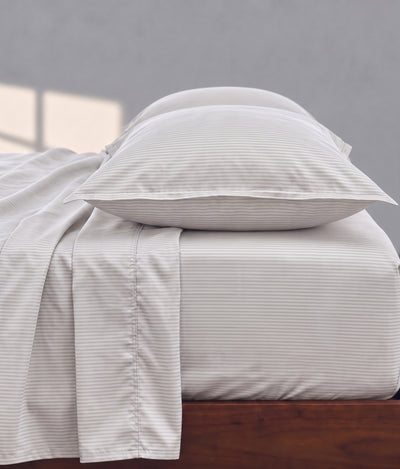
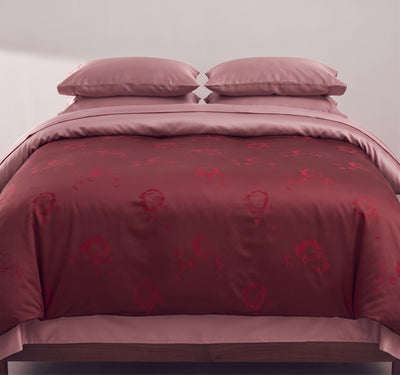


Key Takeaways
-
OEKO-TEX® certification means a finished textile was lab-tested against more than 1,000 harmful substances and passed the limit values for its product class.
-
The screening covers the headline substance families: formaldehyde, certain azo dyes, heavy metals, phthalates, pesticide residues, and PFAS.
-
The certification system has run for over 30 years through independent institutes, with criteria updated at least annually, and any certificate can be verified online.
-
It tests a defined list with limit values; it's a chemical screening of the finished textile, and it says nothing about sustainability or ethics.
-
CLASS 1, the tier for products for babies, carries the strictest requirements, and it's the tier to look for on bedding.
Shoppers have earned the right to distrust labels.
"Eco-friendly" has no legal definition, "non-toxic" can mean almost anything, and greenwashing has trained all of us to squint at every green leaf on a package. When a tag says OEKO-TEX®, the fair question is whether this one is different.
So, is OEKO-TEX® safe to trust? Yes, within a clearly defined scope: a certified textile was lab-tested against more than 1,000 harmful substances and came in below strict limit values.
That's a checkable claim, and this article unpacks exactly what sits behind it: what the certification screens, who runs it, and where its job ends.
What OEKO-TEX® Certification Screens For
The claim behind the label is specific.
To carry OEKO-TEX® STANDARD 100, every component of a finished textile down to the fabric, thread, and buttons must pass laboratory testing. The list covers more than 1,000 substances with documented links to human health risk.
The screening covers the chemical families shoppers actually worry about:
-
Formaldehyde, used in wrinkle-resist finishing
-
Certain azo dyes that can release carcinogenic compounds
-
Heavy metals, including arsenic and chromium
-
Phthalates, the plasticizers used in some prints and coatings
-
Pesticide residues carried into the fabric from the fiber
-
PFAS, the persistent chemicals used in stain and water resistance
Limit values are set by product class and based on intended use: the more direct contact with the skin, the stricter the thresholds.
The claim on a certified product is deliberately narrow: this textile's test results came in below defined limits for the way it will be used. That precision is the point.
Is OEKO-TEX® Legit? Who Runs It and How It's Policed
Skepticism about textile labels is reasonable, so it's worth asking directly: is OEKO-TEX® legit? The structure says yes.
The OEKO-TEX® Association was founded in 1992 by two textile research institutes, and the certification system today runs through independent institutes across Europe and Japan.
The labs that do the testing don't sell sheets, and the brands buying certification don't run the labs. That separation is what makes the result credible.
The criteria don't sit still, either.
The substance list and limit values are reviewed and updated at least once a year as new findings emerge. That means the certification keeps pace with the science, and what passed a decade ago has to keep earning its certificate today.
Certificates expire after 12 months and must be re-earned.
And here's the feature that separates a real certification program from a decorative leaf on a package: you can check it.
Every certified product carries a certificate number, and the OEKO-TEX® Label Check lets anyone verify online that the certification is current and covers that specific product.
A claim you can look up is the opposite of greenwashing, which survives only where verification is impossible.
What the OEKO-TEX® Certification Doesn't Cover
An honest answer about trust has to include the limits, and OEKO-TEX® has real ones. Three are worth knowing before you put weight on the label.
It Screens a List, With Limits
The testing screens a defined list of substances against limit values. That list is long and updated annually, but "certified" means screened against known risks.
No certification anywhere can promise a product contains no chemicals at all, and any label implying it deserves extra suspicion.
It's a Chemical Check, Nothing Broader
STANDARD 100 is a chemical screening of the finished textile, and that's all this label is.
It says nothing about sustainability or how the people who made the product were treated; the organization runs separate labels for facility standards, but those are different certificates on different products.
A certified polyester sheet is chemically screened, but it's still polyester, with everything that implies for how it sleeps and how it biodegrades.
Farming practices and labor conditions are other certifications' territory, GOTS among them. Reading the label for more than it claims is how shoppers get disappointed.
The Tier Changes the Strictness
Product classes carry different limit values, so two certified products aren't automatically screened to the same strictness. That's calibration to intended use, working as designed.
But it means the class on the certificate is worth reading, especially for anything that lives against your skin.
The CLASS 1 Difference, and Going Beyond It
That last limit, the tier, is worth dwelling on, because it's where bedding quietly separates.
Sheets only need Product Class 2, the direct skin contact tier, to carry the label. Class I is a different bar entirely: the tier for products for babies and toddlers, with the strictest requirements in the certification.
Infant skin is thinner and more sensitive than adult skin, so the thresholds are set for the most vulnerable user. Limit values tighten across the board, and formaldehyde must come back non-detectable.
Nothing requires adult bedding to meet that standard, but some of it does, and the certificate is where you find out.
Every sheet Buffy makes is certified to OEKO-TEX® STANDARD 100 CLASS 1, the infant-grade tier. On PFAS, the substance family in the headlines, the testing goes a step past the certification itself: Verified Total Fluorine-Free. The fabrics are confirmed to contain zero fluorine, which rules out the entire PFAS class.
The certification asks whether a fabric clears the bar set for its intended use. A brand decides how high to set that bar.
So, Is OEKO-TEX® Safe? Yes, If You Read It Right
Asking whether OEKO-TEX® is safe is really asking whether you can stop second-guessing the fabric you sleep in. And that's what this label earns you: a lab result you can pull up yourself, from a system that has to re-prove itself every year.
When a purchase matters, spend the thirty seconds: find the certificate number, run it through the Label Check, and read the product class. If you want the answer at its strictest, that class is the one to check.
Every sheet in Buffy's collection, whether Breeze, Supima cotton, or Belgian linen, carries OEKO-TEX® STANDARD 100 CLASS 1, the infant-grade tier, so the question you came here with is one you can settle before checkout, with the certificate to prove it.
Frequently Asked Questions (FAQs)
Is OEKO-TEX® certified bedding actually safe?
OEKO-TEX® certified bedding has been lab-tested against more than 1,000 harmful substances and passed the limit values for its product class, under one of the world's best-known textile certifications. For the tightest thresholds, look for CLASS 1, the tier built for products for babies, which some bedding carries voluntarily.
Does OEKO-TEX® certification guarantee a product is free of all harmful chemicals?
No, and no credible certification makes that promise. OEKO-TEX® screens a defined list of more than 1,000 substances against limit values, updated at least annually as the science moves. What it guarantees is that the finished product was tested against known risks and came in below the thresholds for its product class, a specific, verifiable claim, and far more useful than a blanket one.
OEKO-TEX® certified vs uncertified bedding: how much safer is it really?
The honest difference is knowledge. Certified bedding was tested by an independent lab against more than 1,000 harmful substances, and the results cleared defined limits; uncertified bedding may be perfectly fine, but nobody has checked, and you can't tell by looking. For fabric that spends eight hours a night against your skin, a verified test result is the difference between knowing and hoping.