


Key Takeaways
-
TENCEL™ lyocell absorbs about 50% more moisture than cotton and moves vapor 2.5× faster, which keeps the sheet surface drier during a hot sleeper's night.
-
TENCEL™ lyocell tests at Qmax 0.224 per FTTS-FA-019 for cool-to-touch sensation, while cotton sits around 0.13.
-
Cotton wins on classic crisp texture and long-haul durability from its extended staple length; TENCEL™ wins on cooling and moisture management out of the package.
-
OEKO-TEX® STANDARD 100 Class I tests the finished textile against more than 1,000 harmful substances, and Buffy's sheet sets in both fibers carry the certification.
-
The right choice depends on what you're solving: cooling and moisture (TENCEL™ Breeze) or classic crisp cotton texture (Supima cotton percale).
If you're comparing TENCEL™ lyocell vs cotton for sheets, you're comparing two cellulose fibers with very different performance profiles. Both make quality bedding.
But cotton and TENCEL™ don't behave the same way at the fiber level, and the differences show up in exactly the places that matter for sleep: heat management, moisture handling, chemistry, and how the surface reads overnight.
At Buffy, we make sheet sets in both fibers, which puts us in a rare spot for this kind of comparison: no vested interest in picking a favorite.
What we can do is show you how each fiber performs on the metrics that decide sleep quality, and let you choose the one that solves the problem you're actually trying to solve.
TENCEL™ Lyocell vs Cotton, Compared Point by Point
For anyone comparing TENCEL™ lyocell vs cotton with a specific problem in mind, the short answer is that TENCEL™ lyocell outperforms cotton on cooling, moisture management, and inherent chemistry consistency. Cotton wins on price flexibility, familiarity, and long-haul durability from the extended staple length.
Neither is the universal answer.
The six dimensions below cover what each fiber actually does at the sheet level and where the differences matter most for sleep.
|
Dimension |
TENCEL™ Lyocell |
Cotton |
|
Moisture uptake |
~50% higher than cotton |
Baseline |
|
Vapor flux |
2.5× higher than cotton |
Baseline |
|
Cool-to-touch (Qmax, FTTS-FA-019) |
0.224 |
~0.13 |
|
Surface texture |
Smooth, fluid drape |
Crisp to smooth depending on weave |
|
Chemistry |
Closed-loop solvent process; OEKO-TEX® STANDARD 100 Class I |
Certified finishing chemistry; OEKO-TEX® STANDARD 100 Class I |
|
Environmental footprint |
Closed-loop solvent process (eucalyptus) |
Managed US agriculture; long-lifespan reduces per-year footprint (Supima) |
|
Care |
Machine wash cold, tumble dry low |
Machine wash cold, tumble dry low |
1. Moisture Uptake and Vapor Flux
The difference between TENCEL™ lyocell and cotton on moisture management shows up most clearly in the middle of a hot night.
The two fibers handle sweat differently at the fiber level.
Cotton absorbs sweat into the fabric and stores it there. TENCEL™ pulls sweat into the fiber core and releases it back into the room as vapor. For a hot sleeper, the TENCEL pattern keeps the sheet surface drier through the night.
The numbers behind that difference: TENCEL™ lyocell absorbs about 50% more moisture than cotton and moves it out as vapor 2.5 times faster. Both are structural properties of the fiber.
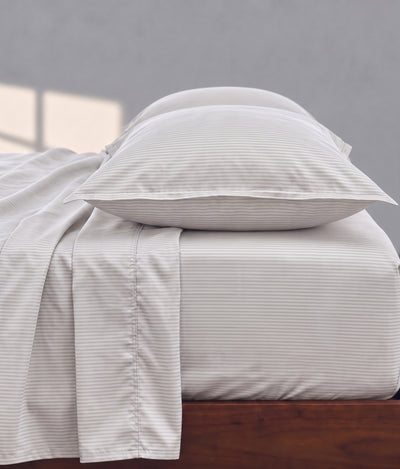
Buffy's Breeze Sheet Set uses 100% TENCEL™ eucalyptus lyocell precisely because that fiber-level performance holds up through hundreds of wash cycles.
2. Cool-to-Touch (Qmax) and Overnight Cooling
Cool-to-touch is a measurable property of the fabric. It's called Qmax, and the number tells you how quickly the fabric conducts heat away from your skin at first contact.
Cotton tests around 0.13, which reads as neutral against skin. TENCEL™ lyocell tests at Qmax 0.224 per FTTS-FA-019, which reads as immediately cool.
TENCEL™ lyocell is the pick for hot sleepers; cotton is a better fit for people who prefer their bedding to warm up with their body.
The distinction that matters for long-term performance is where the cooling comes from. TENCEL™ stays cool because of what it is. Not because of what we added to it.
Most sheets marketed as "cooling" rely on PCM (phase-change material) coatings sprayed onto the fabric after weaving, and those coatings fade after 10 to 20 wash cycles. TENCEL's cool-to-touch performance comes from the fiber's inherent thermal conductivity, which stays consistent through years of washing.
3. Softness, Weave, and Surface Character
Softness in sheets comes down to texture, and TENCEL™ lyocell and cotton offer very different textures. Both have real fans.
TENCEL™ lyocell scores on fiber diameter, surface smoothness, and drape. The fiber is finer than most cottons, the surface is smoother, and the drape is more fluid. That gives TENCEL™ sheets a distinct texture: less crisp, more like something that moves with your body.
Cotton delivers something different: structure. Long-staple Supima cotton in a percale weave has a crisp, cool character that some sleepers won't trade for anything else. It softens with each wash cycle and develops a broken-in quality over years of use, without losing the structured surface that percale is known for.
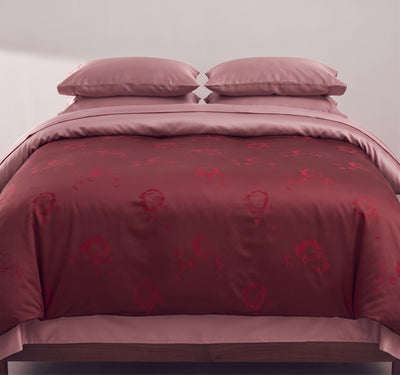
Buffy's Supima Cotton Collection is 100% long-staple Supima grown in the US, for anyone who wants the classic sheet character.
4. Chemistry, Dyes, and Certification
Cotton and TENCEL™ lyocell both go through processing before they hit the finished sheet. The chemistry involved is where sheet quality separates sharply.
TENCEL™ is produced through a closed-loop solvent process where the solvent is recovered and reused, which limits chemical residues in the finished textile. Cotton's chemistry story lives in the finishing stage: dyes, softeners, and treatments.
When those are managed to a real standard, cotton is on equal footing with any premium fiber. Long-staple Supima cotton, grown in the US, is an example of that.
The certification worth asking about on any sheet is OEKO-TEX® STANDARD 100 Class I, the infant-grade tier that tests the finished textile against more than 1,000 harmful substances.
Buffy's TENCEL™ and Cotton Collection both carry the same Class I certification. Buffy's dyes are also saliva-tested and non-migratory, so the color stays in the fiber under heat and sweat and doesn't transfer to skin.
5. Environmental Footprint and Sustainability
Environmental footprint on a sheet depends on which fiber you're comparing and where it's sourced.
TENCEL™ lyocell is produced from wood pulp, typically eucalyptus, in a closed-loop solvent process where over 99% of the solvent is recovered and reused. The process is water-efficient by design and doesn't require the growing cycle of a field crop.
Long-staple Supima cotton is grown in the US under managed agricultural standards, and Supima's durability means a well-made sheet often lasts years longer than shorter-staple cotton, which lowers the per-year footprint. That's a different environmental story, and a valid one.
Buffy sources both lines with OEKO-TEX® STANDARD 100 Class I finishing chemistry, so the downstream chemistry footprint stays consistent across the collection.
6. Care, Durability, and Longevity
Both TENCEL™ lyocell and cotton perform best under simple, consistent care. The recommended care standard on both fibers is the same: machine wash cold, tumble dry low.
Skipping high heat protects fiber structure across both lines, so the lyocell keeps its smooth surface and cotton keeps its softness cycle after cycle.
Durability plays differently across the two. Long-staple Supima cotton is built for the long haul. The extended staple length reduces pilling and holds up through years of wash cycles, and Supima sheets tend to soften with each wash.
TENCEL™ lyocell holds its cool-to-touch performance and fiber-based breathability through hundreds of wash cycles because the cooling is a structural property of the fiber itself.
Both fibers are engineered for years of use.
TENCEL™ vs Cotton: How to Choose the Right Sheet for Your Sleep
The right sheet comes down to what you're solving.
If you're a hot sleeper, sweat through the night, or want cooling that doesn't fade after 20 washes, TENCEL™ lyocell earns the spot. The 50% higher moisture uptake, 2.5× vapor flux, and Qmax 0.224 are structural properties of the fiber that hold through hundreds of wash cycles.
If you love a crisp, structured sheet that softens over years of use, long-staple Supima cotton is the pick. The extended staple length reduces pilling and lasts through years of wash cycles, and the classic crisp cotton character is exactly what many sleepers want.
Buffy makes both. The Breeze Sheet Set covers the TENCEL™ side; the Supima Cotton Collection covers the classic cotton side. Both carry OEKO-TEX® STANDARD 100 Class I certification, so the chemistry footprint is consistent either way.
Shop the full Buffy sheet lineup to compare.
Frequently Asked Questions (FAQs)
TENCEL™ lyocell or cotton sheets, which is better?
Neither is universally better. TENCEL™ lyocell wins for hot sleepers because it moves moisture 2.5× faster and tests cooler (Qmax 0.224 vs cotton 0.13). Cotton wins on familiar crisp texture and forgiving laundry care. Buffy sells both under OEKO-TEX® STANDARD 100 Class I.
Is TENCEL™ cooler than cotton for hot sleepers?
Yes. TENCEL™ lyocell tests at Qmax 0.224 per FTTS-FA-019 for cool-to-touch sensation, while cotton sits around 0.13. It also absorbs 50% more moisture than cotton and moves vapor 2.5× faster, so the sheet surface stays drier through the night. The cool comes from the fiber itself and stays consistent through years of washing.
What is the difference between TENCEL lyocell and cotton bedding?
TENCEL™ lyocell is spun from eucalyptus wood pulp through a closed-loop solvent process, producing a smoother fiber with 50% higher moisture uptake than cotton. Cotton is grown from the cotton plant with a more variable fiber structure. The practical differences: TENCEL™ sleeps cooler and drier, cotton has a crisper texture and a wider price range.
Is TENCEL™ better for sensitive skin than cotton?
TENCEL™ lyocell is often the better fit because the smoother fiber reduces skin friction, and closed-loop production limits residual chemistry. Cotton also works well for sensitive skin when it's long-staple Supima, OEKO-TEX® STANDARD 100 Class I certified, and dyed with non-migratory chemistry. The certification matters more than the fiber choice for sensitivity outcomes.