
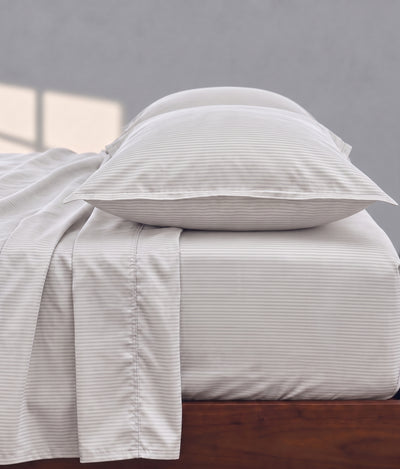
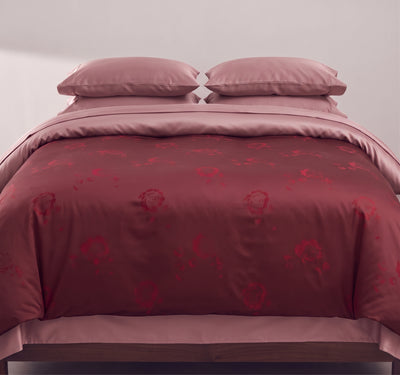




Beyond Bamboo Breeze Comforter
The cool, silky-soft bamboo fabric we love—made safer for the home. Beloved for softness. Trusted for breathability. Recognized by editors. Made from 100% TENCEL® lyocell.
Size
Add Breeze Duvet Cover?

"Best Overall Comforter"

"Best Temperature Regulating Comforter"

"Best Place To Buy Bedding"

"Best Cooling Blanket"

Everything you want from bamboo
The Beyond Bamboo Breeze Comforter delivers the silky softness, cooling comfort and plant-derived feel people love about bamboo.
But instead of bamboo viscose, they’re made with TENCEL™ Lyocell—a silk-soft, cooling fiber derived from Eucalyptus.

Without the harmful chemistry
Turning bamboo into viscose requires Sulfuric Acid and Carbon Disulfide — a known neurotoxin.
TENCEL™ lyocell doesn't. It uses an organic solvent to turn Eucalyptus into silk soft bedding fibers.
Both begin as a plant. Only one belongs in your bedroom.

Hot sleep is a moisture problem
Humidity trapped between your body and bedding cause overheating and sweating. TENCEL™ Lyocell helps absorb and release moisture, supporting a drier microclimate under the covers.

Bedding that's cold to the touch isn't enough
Buffy fights heat and sweat at the source.
Eliminate Moisture
Made of eucalyptus-derived TENCEL™ Lyocell — the optimal choice to relieve humidity under the covers.
Dissipate Heat
Eucalyptus fibers have up to 10x higher Thermal Conductivity Ratings (a measure of a material's intrinsic ability to transfer heat via conduction).
Higher Breathability
Breeze fabric has lab-tested 32% higher airflow than cotton based bedding.
8,000 chemicals are used to process the average textile
Bedding labels don't name a single one. The Breeze is tested and certified by OEKO-TEX® STANDARD 100 CLASS I for:
0 Pthalates
0 Formaldehyde
0 BPA or BPS
0 Industrial Softeners
0 Wrinkle-resist finishes

Radically Clean versus Organic
While organic bedding standards like GOTS® ensure the original fiber is organically farmed — it doesn't lab test the finished product.
OEKO-TEX® CLASS I rigorously tests finished textiles to ensure all the steps in between the farm and your bed — chemical softening, brightening, fixing, and dying — are free of harmful substances.

At Home Trial
–Pay $0 at checkout
–We only charge you after 7 nights
–Enjoy risk-free 50 night free returns
|
Breeze Cooling Comforter |
Traditional Comforters |
|
|---|---|---|
|
Breathable TENCEL® Shell |
Yes |
Usually No |
|
Designed For Hot Sleepers |
Yes |
Not Necessarily |
|
Lightweight Construction |
Yes |
Often Heavier |
|
Down & Feather Free |
Yes |
Varies |
|
Moisture Managing Fabric |
Yes |
Varies |
|
Fluffy Comfort |
Yes |
Usually Yes |
Bamboo vs. TENCEL™
Yes. Both bamboo viscose and TENCEL™ Lyocell can have the smooth, silky feel people look for in plant-derived comforters. TENCEL™ Lyocell fibers are naturally soft and smooth to the touch, while the finished feel also depends on the yarn, weave and construction of the fabric.
Both can feel cool and comfortable for hot sleepers. TENCEL™ Lyocell is especially effective at absorbing and managing moisture, helping the bedding stay drier as you sleep. The fiber name is only part of the story, though—the weave, fabric weight and construction also affect how cool a comforter feels.
Usually, bamboo is the plant source—not the finished fiber. Most soft “bamboo comforters” are actually made from rayon or viscose created using cellulose extracted from bamboo. The FTC requires these textiles to be labeled as “rayon made from bamboo” or “viscose made from bamboo,” rather than simply bamboo.
Both begin with plant-derived cellulose, but they use different processes to turn it into fiber.
Bamboo viscose is generally made through the conventional viscose process, which uses carbon disulfide. TENCEL™ Lyocell uses a different solvent system that does not use carbon disulfide and recovers more than 99.8% of its processing solvent for reuse. The result is a similarly soft, fluid fiber made through a more controlled manufacturing process.
Yes. Turning wood pulp into a soft textile fiber requires processing, so TENCEL™ should not be described as chemical-free.
The important distinction is the chemistry used. TENCEL™ Lyocell does not rely on the carbon-disulfide process commonly used to manufacture conventional bamboo viscose, and more than 99.8% of its solvent is recovered and reused.
Either fabric can feel smooth against the skin, but the plant source alone does not prove that a finished sheet is suitable for sensitive skin. Look for a smooth fabric, good moisture management and independent harmful-substance testing.
Buffy Breeze Comforters are made with smooth TENCEL™ Lyocell and certified to OEKO-TEX® STANDARD 100, Product Class I—the strictest product class, intended for textiles used by babies and young children. That does not treat or prevent a skin condition, but it provides meaningful finished-product reassurance.
There is no universal winner based only on the words “bamboo” or “TENCEL™.” Durability also depends on fiber quality, yarn strength, weave, finishing and how the comforters are washed.
TENCEL™ Lyocell is known for high strength among cellulosic fibers, making it a strong foundation for durable bedding. Proper care remains important for preserving softness and minimizing unnecessary wear.
Machine wash TENCEL™ comforters in cold water and tumble dry on low. Avoid bleach and fabric softeners, which can coat or damage the fibers and interfere with their moisture-management performance.
Following gentle care instructions helps preserve the comforters’ smooth feel and appearance over time.
